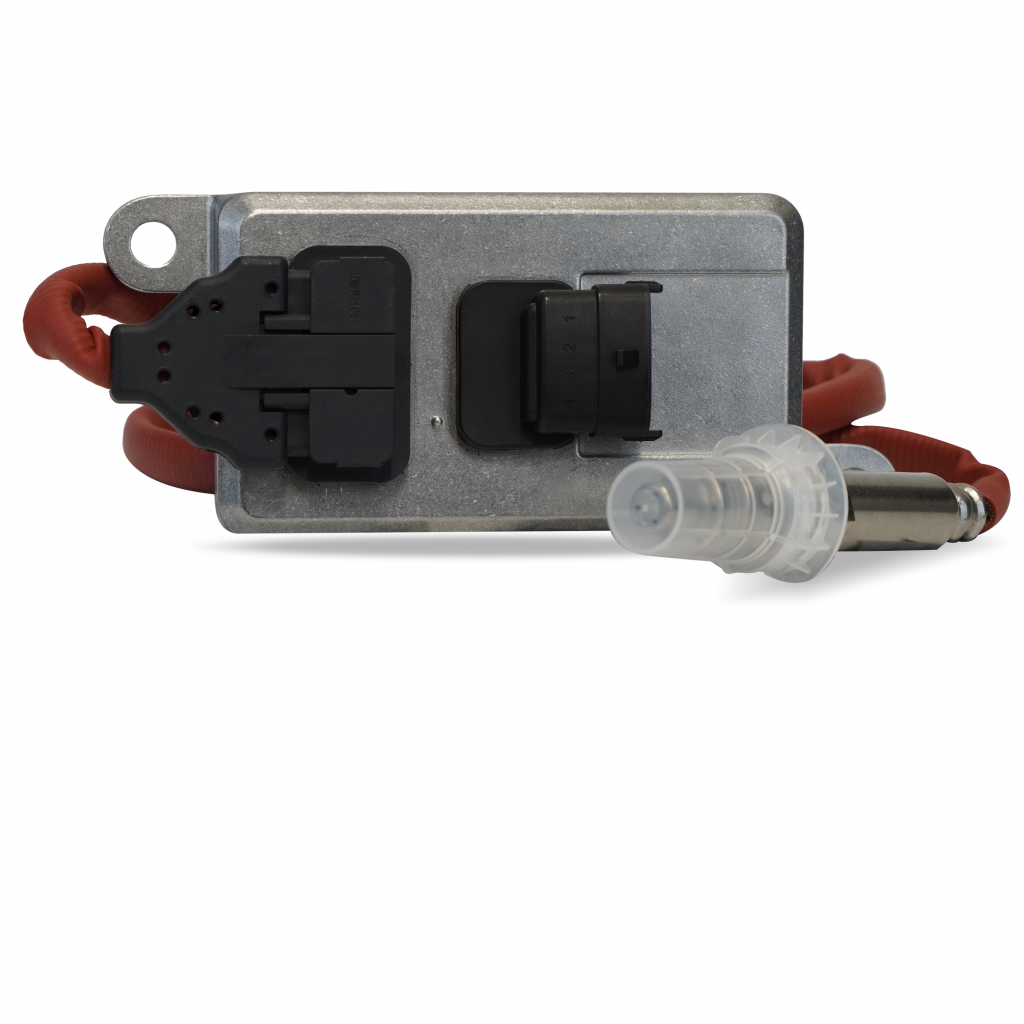
NOX sensors
Do you have questions about NOX sensors? Check out the FAQ!
The NOx sensor is a device that is used to measure the concentration of nitrogen oxides (NOx) in the exhaust of vehicles and other emission sources.
Nitrogen oxides are harmful to the environment and human health. Their reduction is crucial for improving air quality and limiting the emission of harmful compounds.
The NOx sensor works on the principle of electrochemical detection of nitrogen oxides. As exhaust gases flow through the sensor, nitrogen oxides react with the electrodes inside the sensor, generating an electrical signal.
The NOx sensor is usually located in the car's exhaust system, either before the catalytic converter or in the catalytic converter.
Brake calipers
Have questions about brake calipers? Check out the FAQ!
The brake caliper is a key component of the braking system that converts hydraulic pressure into mechanical force, causing the brake pads to clamp onto the brake disc. As a result, friction between the pads and the disc causes the vehicle to slow down or stop.
Brake calipers for trucks are typically made from durable materials such as cast iron or steel to withstand heavy loads. They can also be equipped with additional features, such as a self-adjusting mechanism that automatically adjusts the position of the brake pads as they wear.
Yes, but in order for the regeneration to bring the best results, it is worth entrusting it in the hands of specialists.
Safety: brake calipers are a key component of the braking system that directly affects the safety of the driver and passengers. Without a functioning brake system, active safety systems such as ABS, ASR, ESP will also not work properly.
Brake pads
Do you have questions about brake pads? Check out the FAQ!
Brake pads are components of a car's braking system, made of a friction material that rubs against the brake disc or drum to slow or stop the vehicle.
A thick brake pad lining provides better and more efficient braking, which is crucial for road safety. Excessively thin brake lining can lead to reduced braking performance and an increased risk of accidents
When the driver presses the brake pedal, the brake pad compresses against the brake disc, creating friction that slows or stops the vehicle.
The message "Replace pads" usually means that the friction lining on the brake pads is significantly worn and no longer provides effective braking. This is a signal to replace the brake pads immediately to ensure safe driving.
Symptoms of a defective brake pad may include poor braking, squeaking or creaking sounds, vibration in the brake pedal, and an unpleasant smell or smoke from around the wheel. In such a case, an immediate visit to a mechanic is recommended.
Brake pads are generally not repairable; instead, they are replaced with new ones when they are worn or damaged. Repairing worn brake pads is not recommended for safety reasons.
AdBlue pumps
Do you have questions about the AdBlue system? Check out the FAQ!
AdBlue is an aqueous solution of urea (32.5%) and demineralized water (67.5%). It is a non-toxic fluid that is injected into the exhaust system, where it reacts with the exhaust gases under high temperatures.
The AdBlue pump is a key component of the selective reduction (SCR) system in diesel cars. The SCR system is a technology used to reduce emissions of nitrogen oxides (NOx), which are harmful to the environment.
The AdBlue pump delivers AdBlue fluid to the SCR catalytic converter, which is located in the exhaust system. The AdBlue fluid, which is a solution of urea and demineralized water, releases ammonia when exposed to high temperatures in the SCR catalytic converter. The ammonia then reacts with nitrogen oxides in the exhaust gas, converting them into water vapor and harmless nitrogen. Through this process, the AdBlue pump helps reduce emissions of harmful nitrogen oxides from diesel cars, helping to protect the environment.
Meeting emissions standards: In recent years, car emissions regulations have tightened considerably, with the introduction of new Euro emission standards that limit the emission of individual exhaust components. To be approved, or compliant, a car must meet the emission limits. Nitrogen oxides are one of the most harmful components of exhaust gases, especially those emitted by diesel engines. The Euro 5 standard limited nitrogen oxide emissions to 0.18 g/km, and the Euro 6 standard to 0.08 g/km. Diesel automakers must use new equipment such as the Selective Catalytic Reduction (SCR) system, which uses Adblue, to meet these requirements.